Author Archives: Iim Admin

Why Investors Aren’t Replying to Your Pitch?

You’ve built your deck, crafted your story and hit send with hope. And then, silence!

If you’ve been ghosted by investors, you’re not alone. Thousands of founders find themselves in the same spot every day, wondering where they went wrong. The truth? Unlike what many might believe, most investor silence isn’t personal, but structural. Let’s decode what might really be happening behind the scenes.


1. You’re Targeting the Wrong Investors

While investors may be sector-agnostic, many of them focus stringently on specific sectors and stages of startups. Pitching to investors outside their focus area, stage, or sector could mean an instant “ignore” for startups.

Pro tip: Research before you reach out. Use platforms like Crunchbase, PitchBook or Tracxn to understand each firm’s portfolio. Look at what they’ve invested in during the past 12-24 months. Read their blog posts and partner interviews to understand their investment philosophy. Create a targeted list of 20-30 investors who have explicitly funded companies in your space, at your stage, with similar characteristics. If your startup aligns with their past investments, your odds of a reply go up dramatically.


2. You’re Too Early

There’s a painful gap between when founders think they’re ready to raise venture capital and when VCs are actually interested. Most venture capitalists avoid betting on ideas or prototypes. They’re investing in demonstrable traction, product-market fit and scalable growth. If you’re still at the idea or prototype stage, your pitch might not fit their risk appetite. 

Pro tip: Be honest about where you are. If you’re pre-product or pre-traction, focus on angel investors, accelerators or friends and family rounds. These sources are designed for earlier stages. Use this capital to build your minimum viable product, acquire your first 100-1,000 users and generate initial revenue. Once you have tangible metrics to show, only then approach VCs. Build first, pitch later.


3. Your Cover Letter is Incoherent

Your pitch deck might be gold, but if your intro mail is confusing, long-winded or generic, you’ve lost them already. Investors spend less than a minute deciding whether to open an attachment. So, if your email doesn’t immediately answer “what do you do,” “why does it matter,” and “why should I care about you specifically,” you’re done.

Pro tip: Make your introduction concise and evidence-based. You need to hook them in the first two sentences with what you do and the problem you solve. Follow with real numbers that prove people want what you’re building. End with a clear ask and a reason why this particular investor is a good fit for your company.


4. Your Idea Feels Replicated, Sans any Differentiation

Venture capital is a game of outsized returns. Investors need to believe your startup has the potential to become a billion-dollar company, or at a minimum, return 10x their investment. When they see a pitch for another project management tool, another food delivery app, or another marketplace for X, their default response is scepticism. Markets are crowded. If your product doesn’t stand out in its category, it gets lost in the noise.

Pro tip: Highlight what makes your startup different. A fundamentally different approach to solving the problem. A unique insight about customer behaviour that others have missed. Proprietary technology or data that’s difficult to replicate. Or a business model innovation that changes the economics of the industry. Focus on what sets you apart at a structural level.


5. You Couldn’t Make Through the “Sniff Test”

Investors are trained to detect exaggeration. When something smells off, when the numbers don’t quite add up, when claims sound too good to be true, or when there’s more vision than evidence, they move on. If your claims don’t add up—say, a pre-revenue startup claiming “10x growth potential”—you may fail the invisible sniff test.

Pro tip: Replace “we will” with “we did” with historical evidence. Let real numbers, testimonials and user data speak for you. Instead of “we will reach ₹8 Cr ARR next year,” say “we’ve grown from ₹8 Lakh to ₹70 Lakh MRR in six months, putting us on track for ₹8 Cr ARR.” Instead of “customers love our product,” say “we have a 75% monthly retention rate.” Show your work. Investors invest in proofs, not promises.


6. You Sent One Mail and Gave Up

Even the best pitch can get buried under hundreds of unread emails. Most founders send one pitch email and interpret silence as rejection. They move on to the next investor, rinse and repeat, never following up. This is a massive missed opportunity.

Pro tip: Follow up strategically. Send a short, respectful update email after a week or two. Persistence (not pestering) gets noticed. Send 2-3 follow-ups over the course of 4-6 weeks, each with a genuine update like a new milestone, a press coverage or a partnership. If you still get no response, move on. But don’t give up after one attempt.


At the end of the day, fundraising is part science, part art and mostly consistency. To break through the noise, you need to align your pitch with what investors truly care about.

1. Validate investor fit before reaching out.

2. Lead with traction and a clear problem–solution narrative.

3. Personalise every pitch. Mass emails don’t work.

4. Treat fundraising as a process, not a one-time event


Investor silence doesn’t mean your startup lacks potential. It means your approach needs refinement. Think of every ignored email as a signal to improve, not a verdict on your idea. Build traction, sharpen your message and find investors who truly get what you’re building.


GoI introduces Next-Gen GST Reforms: Here’s how Startups can Benefit from the New Regime

India’s GST Council has recently unveiled one of India’s most transformative tax overhauls since the rollout of GST in 2017. The GST Reforms, coming into effect on September 22, 2025, don’t just mean cheaper goods for consumers, but could completely change how startups run their businesses, manage money and grow.

Here’s an overview of what the new reforms have in store.


Key Changes in GST 2025

  • Simpler Tax Slabs: Just two main rates now: 5% for essentials and 18% for standard items. Luxury items stay high at 40%.
  • Cheaper Essentials: Everyday items like groceries, toothpaste, hair oil, cornflakes and personal care products are now at 5% or NIL.
  • Mobility Boost: Taxes on small cars (≤1200cc, ≤4000mm) and two-wheelers (≤350cc) cut from 28% to 18%.
  • Agri Relief: Taxes on agricultural machinery dropped from 12% to 5%.
  • Drone Tech: GST on drones with cameras cut to 5%.
  • Healthcare made Affordable: Life and health insurance premiums are now GST-free, while 36 life-saving drugs have moved to a zero-tax slab. GST on other medicines has been cut to 5%, and medical equipment and devices now attract only 5% instead of 18%.
  • Easier Compliance: E-commerce sellers can get GST registration approved in just 3 days.


Economic Impact

The nation may initially witness a short-term dip in revenue (₹48,000–₹480 billion), but higher consumption could add 1% to GDP within a year.

What This Means for Startups

  1. Lower Costs, Higher Margins
  • Startups in FMCG, food tech and D2C brands can now sell essentials at competitive prices with better margins.
  • Mobility startups (bike rentals, EV leasing, small cars) benefit from lower taxes on vehicles.
  • Agri-tech startups offering farm machinery or agri-input platforms can now sell products at more accessible prices.
  • Health-tech startups can now make their products more accessible through better affordability.


  1. Demand Surge
  • With essentials and goods becoming cheaper during the festive season, consumer spending is set to rise.
  • Insurance and fintech startups can promote affordable health/life policies
  • Drone startups in agriculture, logistics and security will see stronger adoption thanks to lower costs.


  1. Simpler Compliance
  • Startups selling across states via e-commerce will find GST registration faster and paperwork lighter, resulting in faster onboarding and go-to-market.
  • Less time on tax filing means lean teams can focus more on growth instead of tax admin.


  1. Better Cash Flow
  • Lower upfront GST rates mean more liquidity for startups.
  • Simplified filing will reduce the risk of blocked input credits.
  • Saved funds can be invested in marketing, hiring or R&D.


Points of Caution

  • Reclassify products/services carefully: With the new GST slabs in place, startups need to be extra cautious in how they classify their products and services. A misstep here could mean charging the wrong rate of tax, which may not only invite penalties but also erode customer trust. Founders should work closely with tax consultants to double-check classifications and avoid costly mistakes.
  • Follow anti-profiteering norms: The government has made it clear that the benefits of lower GST must reach the end consumer. This means startups cannot simply keep the tax savings as extra profit. Instead, they are expected to adjust prices so customers feel the impact directly. Ignoring this could invite audits, fines or damage to brand credibility.
  • Update systems from Day 1: ERP systems, billing software and invoicing tools must reflect the revised GST rates immediately. Any delay in system updates could cause compliance issues, wrong filings or customer disputes. Startups should ensure their digital tools are well-configured in advance to maintain accuracy and ensure smooth operations.


Strategic Takeaways for Startups

  • Realign pricing: Startups should quickly adjust their pricing strategies to reflect the reduced GST rates. Marketing products as “Now GST-Cheaper” could give a psychological edge that’d make customers feel they’re saving money. This can help startups stand out in competitive markets, especially for essentials and consumer-facing goods.
  • Update compliance systems: Tax compliance can easily become a headache for growing startups. Automating GST classification and reporting ensures accuracy, reduces human error and keeps the business audit-proof. Early investment in smart compliance tools enables founders and teams to focus on scaling rather than getting bogged down in repetitive administrative work.
  • Leverage festive demand: The reforms arrive just before India’s peak shopping season: Navratri, Durga Puja, to Diwali. Startups should capitalise on this timing by designing promotions and campaigns around the lower GST rates. A simple nudge like “Festive Offers, now even cheaper with GST cuts” can tap into consumer excitement and boost sales volumes.
  • Highlight affordability: For sectors like fintech, Insurtech, agri-tech and mobility, affordability is now a strong selling point. With lower GST, startups in these spaces can position themselves as enablers of access – affordable farm machinery, cheaper health insurance and more economical mobility solutions. This messaging can create deeper trust and wider adoption.


The 2025 GST reforms could be a big boost for the startup ecosystem! The new tax regime lowers costs, eases compliance, and unlocks cash flow, giving startups the much-needed space to focus on innovation, traction and scaling. For founders, the winners will be those who quickly align pricing, marketing and systems to ride this policy wave.

Turning CO₂ into Gold: How New-Age Startups are Powering the Carbon Capture Revolution

The Problem that’s becoming a Billion-Dollar Opportunity

What if the very thing we’ve been trying to get rid of turns out to be the thing that helps us move forward? It sounds like a plot twist. But that’s exactly what’s happening.

Across labs, factories and farmlands, a new wave of climate-tech entrepreneurs is turning pollution into potential. They’re using carbon capture not just to clean the air but to build the businesses of the future. From fuels to building materials, and even diamonds, carbon dioxide is being transformed into value. And in the process, they’re not just helping the planet but also unlocking a whole new economy.

CO₂: From Problem to Possibility

For years, carbon dioxide was seen as a nuisance that we usually despised or just ignored. But today’s startups are rewriting the rules. They’re treating CO₂ not as waste, but as a resource.

Think of it this way:

1. It can be turned into fuels and electronics components.

2. Used to make greener buildings and improve soil health.

3. Translated into luxury goods like perfumes, beverages and even diamonds.

As countries race towards their net-zero targets, industries like cement, steel and aviation are under serious pressure to clean up. That pressure has created a massive opportunity for startups.

What’s exciting is that this isn’t just about cutting emissions. It’s about creating scalable, sustainable businesses that might just become the next household names in clean tech.


Meet the Startups turning Carbon into Value

Climeworks (Switzerland): A trailblazer in Direct Air Capture (DAC), Climeworks pulls CO₂ directly from the air and stores it underground in basalt formations. Backed by Breakthrough Energy Ventures and Microsoft, it is pioneering scalable, decentralised carbon removal infrastructure.

Charm Industrial (USA): Charm Industrial turns agricultural and forestry waste into bio-oil and pumps it into EPA-regulated wells, locking away carbon permanently. With growing demand for durable carbon removal credits, Charm Industrial is helping set the gold standard.

CarbonCure (Canada): CarbonCure injects captured CO₂ into fresh concrete during mixing. The result? Stronger buildings and a smaller carbon footprint by converting the CO2 into a mineral within the concrete. It’s practical, profitable and already being used by construction giants.

India’s Emerging Forces

Carbon Clean: A standout in industrial carbon capture, Carbon Clean focusses on reducing emissions from some of the hardest-to-abate sectors like cement and steel. With partnerships across the globe and $195 M+ raised, it’s putting India on the global carbon capture map.

Takachar: Winner of the Earthshot Prize 2021, these innovators are fighting air pollution and climate change by building portable machines that convert agricultural residue into value-added products, mitigating stubble burning and reducing CO₂.

Varaha Climate: A game-changer in climate-smart agriculture, Varaha Climate helps smallholder farmers adopt carbon-friendly practices and earn money through carbon credits, combining technology, sustainability and livelihoods.

Breakthroughs that are Changing the Game

  • Modular Direct Air Capture (DAC) Systems: Startups like Climeworks and others are proving that Direct Air Capture can scale like cloud data centres.
  • Carbon-to-Value Products: Startups like Air Company, SkyNano and Aether Diamonds are turning CO₂ into fuels, vodka, perfumes, electronics and even diamonds, transforming pollution into premium products.
  • Biochar and Soil Carbon: Startups are enhancing soil fertility and biodiversity while storing carbon long-term, offering win-win solutions for agriculture and climate.

These technologies are no longer science fiction. They’re raising capital, entering commercial markets and operating at an industrial scale.

Why Investors are Paying Attention

In 2023 alone, more than $6 billion went into carbon capture and removal startups. Investors like Lower Carbon Capital, Breakthrough Energy Ventures and Union Square Ventures are all in.

Why?

Stable Revenue from Carbon Credits: Startups can sell credits in voluntary and regulatory markets, bringing in consistent income.

Technology that’s Hard to Copy: The fusion of hardware, software and science creates solid, defensible and scalable solutions.

Policy Support: Incentives like the U.S. Inflation Reduction Act ($180 per ton of CO₂ removed) are making this financially sustainable. India is also increasingly promoting carbon dioxide capture technologies as part of its climate action strategy, offering policy support to encourage innovation and commercialisation in this sector. NITI Aayog has proposed a Carbon Capture, Utilisation and Storage (CCUS) policy with industry clusters, jobs and financial incentives, aiming for a capacity of 750 million metric tons per year by 2050.

Global Problem, Local Innovation: Every region needs its own solutions, making room for diverse, localised startups to shine.

The startups around the world are showing us that the answers to our biggest environmental challenges might already be in the air, literally. They aren’t only reducing emissions but rather reimagining them. CO₂ is no longer the villain of the story. It might just be the unlikely hero of the climate-tech revolution.

India’s Defence Moment: Firing opportunities for Indian startups in the Defence space

India’s defence sector is entering a new chapter—one where the focus is not just on protecting our borders, but on building the strength to do so with homegrown technologies. An apt example of this shift is the newly inaugurated BrahMos Aerospace Integration and Testing Facility in Lucknow, part of a larger national effort to ramp up indigenous manufacturing under the ‘Make in India’ banner. The trend presents an unprecedented opportunity for Indian startups to enter the defence ecosystem, innovate rapidly and shape the future of national security while building globally competitive, cutting-edge defence solutions right here at home. Startups like ideaForge, whose UAVs are now a staple for the Indian Armed Forces, and Tonbo Imaging, which provides advanced imaging and sensor systems for night vision and battlefield awareness, have already demonstrated that Indian startups can deliver mission-critical technologies. Sagar Defence Engineering has developed autonomous marine systems that aid in maritime security, while Big Bang Boom Solutions is working on anti-drone technologies; its Vajra Sentinel Systems being famously deployed by the Indian Air Force during Operation Sindoor. These instances exemplify the capacity of Indian startups in the high-stakes defence sector.

But are we doing enough? Despite the wins, India still does not have a single unicorn in the defence startup space. In contrast, the United States, Israel and China have several startups surpassing the $1 Bn mark. Nevertheless, going by the current trend, the prospects are high for defence startups. With Defence Industrial Corridors taking shape and policies encouraging domestic innovation, India is steadily reducing its reliance on imports and stepping up as a serious player in global defence exports—a development that’s poised to create a nurturing ground for startups in the defence sector.

  1. Growing defence market: Valued at $27.1 billion in 2024, the market is expected to double to $54.4 billion by 2033. With ambitious national targets of achieving Rs. 3 lakh crore (approx. $34.7 billion) in defence production and Rs. 50,000 crore (approx. $5.8 billion) in defence exports by 2029, India is poised to emerge as a key player in the global defence ecosystem.
  2. Substantial budget allocation: India’s defence budget for 2025–26 has climbed to an impressive Rs. 6.81 trillion ($78.7 billion), marking a 9.5% jump from the previous year. This substantial investment underlines the nation’s commitment to strengthening its military capabilities and modernising its defence infrastructure.
  3. Push for self-reliance and import reduction: Historically, India has been one of the world’s largest arms importers. However, recent times have witnessed a significant reduction in imports, with a 9.3% drop in India’s share of global arms imports between 2015-19 and 2020-24. This shift indicates a growing emphasis on indigenous defence production.
  4. Increasing defence exports: India’s defence exports reached a record high of Rs. 23,622 crore (approximately $2.76 billion) in the fiscal year 2024-25, reflecting a 12.04% growth over the previous year. This surge demonstrates the global potential of Indian defence products and the opportunity for startups to tap into international markets.

Government initiatives fuelling defence innovation

  1. Innovations for Defence Excellence (iDEX): The iDEX programme aims to drive innovation in India’s defence and aerospace sectors by providing targeted financial support to startups, MSMEs, and individual innovators. Through its Advanced Defence Technology Innovation (ADITI) challenge, selected projects can receive product-development grants of up to Rs. 25 crores. Additionally, the iDEX Defence India Startup Challenge (DISC) offers funding of up to Rs. 1.5 crore, while iDEX Prime extends financial support up to Rs. 10 crores. These funds are valuable for developing prototypes, offering an excellent springboard for early-stage startups.
  2. Defence Industrial Corridors: India has established two Defence Industrial Corridors, each in Uttar Pradesh and Tamil Nadu, to promote indigenous production of defence and aerospace-related items, thereby reducing imports and driving exports. These corridors offer infrastructure support, streamlined regulations and opportunities for collaboration between private companies, public sector undertakings (PSUs) and international firms. However, startups may not have enough capital bandwidth to invest in such zones. Under the given situation, startups may consider forming consortia with MSMEs or industrial partners to share infrastructure costs.
  3. SIDBI Cash Defence: The SIDBI Cash Defence scheme brings an air of respite for defence startups trying to navigate bottlenecks in executing work orders. The scheme provides short/medium-term financial support to eligible defence MSMEs by way of purchase order financing for executing confirmed work orders with financial assistance of up to Rs. 20 crores.
  4. Technology Development Fund (TDF): Managed by the Defence Research and Development Organisation (DRDO), the Technology Development Fund (TDF) is a pivotal initiative aimed at fostering the indigenous development of defence technologies by supporting startups, MSMEs and academia. The scheme provides grants of up to Rs. 10 crores per project for the development of niche technologies that the Indian Armed Forces can eventually absorb. TDF is particularly focused on bridging the gap between prototype development and actual defence deployment—a phase where many startups struggle due to a lack of capital or access to testing. For startups, the key is to align their R&D with the problem statements issued under TDF and build proof-of-concept models that demonstrate strategic utility.

Areas to focus on

1. Dual-use technologies: It’s smart for startups to build dual-use technologies with both military and civilian applications. Technologies like AI, drones, autonomous systems and cybersecurity have both civilian and defence use cases. Startups can tap into these dual markets to stay financially sustainable while developing defence-ready solutions. For example:

  • ideaForge: Founded by IIT Bombay alumni, ideaForge dominates the Indian UAV market with a 50% market share. Its products are extensively used by the Indian armed forces, state police forces and organisations like the DRDO.
  • QNu Labs: QNu Labs is India’s pioneering quantum cybersecurity company that has also established significant collaborations with India’s defence sector, securing multiple procurement contracts with the Indian Army and the Indian Navy, and advancing India’s defence capabilities through quantum technologies.
  • Indrajaal: Indrajaal, developed by Hyderabad-based Grene Robotics, is India’s first AI-powered wide-area autonomous drone defence system. Designed to protect critical infrastructure such as nuclear plants, oil refineries, ports, airports and power grids, Indrajaal offers real-time airspace security over areas up to 4,000 square km. It is operational at a naval port in Gujarat and is also deployed at India’s largest naval port in Karnataka.

2. Fast, frugal innovation: Startups can identify micro-challenges faced by jawans, officers and logistics units. These could be as specific as better grip gloves for cold climates, portable charging solutions for long treks, or faster tools for field medical assessment. These seemingly small pain points often go unnoticed by large defence players, but solving them can yield a massive impact and open the door to deeper engagements. For example:

  • Axio Biosolutions: The startup has designed smart body armour and trauma care kits for soldiers operating in hostile environments.
  • Signaltron Systems: The startup develops portable, lightweight, mission-ready communication and navigation solutions tailored for defence and aerospace applications. Last year, the Indian army inducted the first-ever indigenous chip-based 4G mobile base station, procured from Signaltron.

Challenges startups must prepare for

1. Long and complex procurement cycles: Unlike B2B or B2C markets, defence contracts often take years to materialise, often exhausting the financial runway and patience of startups. Many get trapped in repetitive trials, feedback loops and “wait-and-watch” situations without any purchase commitments.

To avoid exhaustion, startups may try and validate their innovations with adjacent markets like police and paramilitary forces (e.g., CRPF, BSF), etc.

Example: ideaForge initially collaborated with Indian police forces and disaster management agencies to deploy their UAVs, building credibility and operational experience. These deployments facilitated subsequent contracts with the Indian Army, including a significant order for SWITCH UAVs.


2. High-risk funding environment: Many venture capitalists are wary of defence startups due to long R&D cycles, limited commercial crossover and complex regulations. This creates a funding gap, especially at the post-prototype, pre-scale stage.

To bridge the funding gap, defence startups can explore a combined option of grants, defence-focussed investments and strategic partnerships. Government schemes like iDEX, TDF, etc., can offer crucial early-stage support, especially for high-R&D technologies. At the same time, startups should look beyond traditional VCs and approach defence-focused investors or strategic partners such as Bharat Electronics Limited (BEL) or Hindustan Aeronautics Limited (HAL).

Example: Eastern India’s biggest UAV startup and IIMCIP-incubated venture, Drones Tech Lab, collaborated with state governments, disaster management agencies and corporates in the oil and energy sectors even after securing its first major order with DRDO. This approach not only strengthened their credibility and on-ground experience but also ensured steady revenue while awaiting the lengthy defence procurement process. Simultaneously, the startup capitalised on defence innovation grants under iDEX initiatives like ADITI 1.0 and DISC 9. Taking its vision further, Drones Tech Lab launched EduRade, a dedicated training wing offering top-notch drone pilot training to enthusiasts from diverse backgrounds.


The Indian defence sector represents more than just a growth opportunity; it is a national imperative. For startups, it offers a unique platform to develop technologies that can safeguard lives and secure the borders. While Indian startups possess the grit and the potential, what’s needed now is a full-fledged ecosystem that nurtures long-term, capital-intensive and strategically critical innovations with the seriousness they deserve. Though government policies and pilot funding are suitably set in place, achieving scale will require concerted efforts to mobilise institutional support and private capital. If India is to truly become a defence manufacturing hub, steeped in the ambitious vision of Atmanirbharta (self-reliance), building deep-tech unicorns in this space isn’t just desirable; it’s a necessity.

Decoding the rise of Startup acquisition by Corporates

In recent years, an increasing number of large corporations have been buying out successful startups instead of attempting to replicate their success. So, why are corporations opting for acquisitions rather than innovating from scratch? Let’s dive deep into the key factors driving this trend and explore how startups have been able to achieve remarkable success, often faster than their corporate counterparts.

A prime example of startup success is Minimalist, a Jaipur-based premium beauty brand that built a Rs. 100 Crore business in just 8 months, which has influenced Hindustan Unilever’s decision to acquire the startup. This kind of growth in such a short span is a feat that even well-established, resource-rich corporations often find difficult to replicate. But why is this the case? Let’s break it down.

Agility over Complexity

Corporates, with their layers of management, red tape and complex processes, often find it difficult to move quickly. In contrast, startups benefit from their lean and flexible structures, which allow them to pivot, innovate and execute faster.

Startups, by design, have less bureaucracy and can make rapid decisions. Corporates buying startups gain access to this agility, which can help them overcome the delays caused by their more complex internal systems.

When Walmart looked to establish its foothold in the Indian e-commerce market, it decided to speed up the process by acquiring Flipkart, arguably, the country’s largest e-commerce startup. Flipkart’s agile, tech-driven approach enabled Walmart to penetrate quickly into the Indian market and compete quickly with giants like Amazon.

Founder’s Passion

The passion and drive of startup founders are often key to their success. Unlike large corporations where leadership is more divided and often disconnected from day-to-day operations, founders of startups are deeply involved in every aspect of their business. This unyielding commitment to their vision often drives the innovation and growth that sets them apart.

When Steve Jobs returned to Apple in 1997, the company was on the verge of bankruptcy. His return marked the beginning of a transformation powered by his passion for innovation. Jobs’ relentless focus on design and user experience led to the creation of revolutionary products like the iPod, iPhone and iPad. Apple’s success, driven by Jobs’ vision, is a prime example of how a founder’s passion can turn a struggling company into the world’s most valuable brand.

For corporations, acquiring startups with passionate, visionary founders gives them the opportunity to tap into the passion of the founders, which is difficult to cultivate from within.

Mission-Centric Focus

Startups are often driven by a single, clear mission that guides every decision they make. Unlike large corporations, where multiple divisions may have competing priorities, startups are united by the founder’s vision. This stringent focus enables them to remain nimble and fast-moving, which helps them outpace their larger competitors in areas like product development, customer service, and innovation.

Tesla, under Elon Musk’s leadership, is a perfect example of a mission-driven startup. Musk’s vision of creating sustainable energy solutions has been at the core of Tesla’s rapid growth. While other automakers were slow to embrace electric vehicles, Tesla was focused on one goal: revolutionising transportation through innovation in electric cars. This clear, singular mission has made Tesla the leader in electric vehicles, while traditional car manufacturers struggle to catch up.

When a corporation acquires a startup with a strong, clear mission, it gains the ability to drive faster innovation and maintain a laser-sharp focus on its goals.

Team & Motivation

Startups build strong, motivated teams that are deeply committed to the company’s mission and vision. By hiring intelligent and passionate individuals and often offering them ownership through Employee Stock Ownership Plans (ESOPs), startups create a sense of ownership and responsibility that drives employees to work harder and smarter.

In its early days, Google faced the challenge of competing with well-established tech giants to attract and retain top talent. To address this, the company introduced ESOPs, ensuring that employees had a vested interest in Google’s long-term success. Unlike traditional corporate structures, Google fostered a flat hierarchy, empowering even junior employees to take ownership of major projects and contribute meaningfully. One of its most famous policies, the “20% time” policy, encouraged employees to dedicate a portion of their work hours to passion projects, leading to groundbreaking innovations like Gmail, AdSense, and Google Maps. Further, fostering a transparent culture, founders Larry Page and Sergey Brin conducted weekly TGIF meetings, where they openly discussed company progress and future plans, reinforcing trust and alignment among employees. These strategies created a highly motivated, innovation-driven workforce, transforming Google into one of the most influential companies in history.

Corporates, on the other hand, may struggle with employee motivation, especially in large, hierarchical environments where individuals may feel disconnected from the broader mission. By acquiring startups, corporations gain access to highly motivated teams who are often more passionate and driven than employees at larger companies.

Startups are thriving not just because of their innovative ideas, but because they embody the values of agility, passion and mission-focus—qualities that are often difficult for larger corporations to replicate. For corporations, buying out successful startups isn’t just about acquiring products—it’s about gaining access to a culture of innovation, flexibility and passion. So, is buying a startup the shortcut to staying ahead in today’s fast-paced market? It seems that for many corporations, this is the most effective way to maintain competitiveness and drive the kind of innovation that the market demands.

Best Practices that can transform Mobility Startups

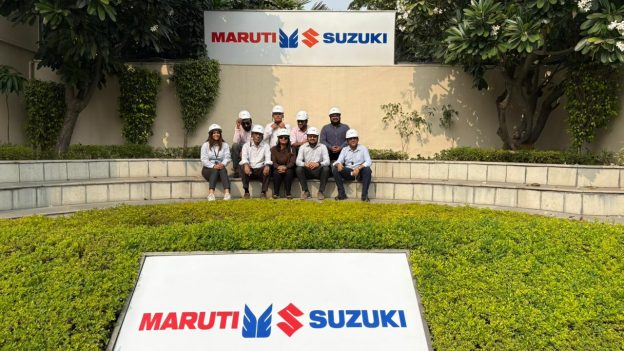
For entrepreneurs and innovators in the mobility sector, few experiences are as enriching as a firsthand visit to an industry leader’s manufacturing facility. Recently, the winners of Maruti Suzuki NURTURE Cohort 2.0 had an invaluable opportunity to visit the Maruti Suzuki India Limited (MSIL) Manesar Plant – one of the largest and most advanced automotive manufacturing facilities in India. The visit offered first-hand insights into state-of-the-art manufacturing practices, lean production processes, automation in vehicle assembly and Maruti Suzuki’s approach to sustainability and workforce development. Following is an elaboration of the experiences and the key learnings picked up by the entrepreneurs during the visit.


Advanced Manufacturing Processes: Setting Industry Standards

The Manesar plant exemplifies cutting-edge manufacturing and thoroughly streamlined processes. The visiting entrepreneurs were introduced to Maruti Suzuki’s just-in-time (JIT) production system, which minimises inventory costs, reduces inventory costs and maximises efficiency by ensuring that the parts arrive exactly when needed.

Key learnings:

– Efficiency through Lean Manufacturing: Adopting lean principles can drastically reduce production costs, improve turnaround times and minimise waste, which can be the deciding factors for the success of any mobility startup.

-Automation for Precision: A high level of automation ensures precision, consistency and superior vehicle quality by minimising human error conspicuously.


Sustainable Manufacturing Practices

Maruti Suzuki’s Manesar plant exemplifies its commitment to sustainability with water recycling, zero-waste-to-landfill systems and solar energy usage, reflecting the company’s dedication to green manufacturing and reducing environmental impact.

Key learnings:

-Green Manufacturing: Sustainability is not just a corporate responsibility but provides a competitive advantage as well. Startups that incorporate eco-friendly practices from the beginning—such as using renewable energy or recycling materials—can appeal to environmentally conscious consumers and investors.

-Resource Optimisation: Meticulous management of resources through thoughtful means like water recycling and energy-efficient equipment can effectively reduce wastage.


The Role of Automation and Industry 4.0

The Manesar plant utilises robotics and automation across welding, assembly and quality control, embodying Industry 4.0 principles. Data analytics further helps enhance operational efficiency, product quality and maintenance.

Key learnings:

-Embrace Industry 4.0: The future of manufacturing is data-driven. By integrating IoT and AI-driven predictive maintenance, startups can improve efficiency, prevent costly downtimes and maintain high product quality standards.

-Flexible Automation: Maruti Suzuki’s use of robots extends beyond repetitive tasks, with some programmed to adapt to different vehicle models, demonstrating the flexibility of automation. This highlights the potential of adaptable automation to optimise operations across diverse product lines.


Workforce Development and Training

Maruti Suzuki’s Manesar plant invests in its workforce through dedicated training centres, ensuring employees are regularly skilled, reskilled and upskilled to stay updated with new technologies and processes.

Key learnings:

-Invest in People: In any high-tech production environment, a skilled and adaptable workforce is essential. Entrepreneurs should focus on building a knowledgeable and versatile team that can keep up with technological advancements.

-Encourage Lifelong Learning: With the pace of innovation in mobility accelerating, fostering a culture of continuous learning can help employees stay relevant and contribute meaningfully to a startup’s growth.


Quality Control and Assurance

Maruti Suzuki’s Manesar plant prioritises quality control at every stage, with automated systems inspecting components to ensure defect-free products, upholding the company’s reputation for reliability.

Key learnings:

-Prioritise Quality Control: In a competitive market, quality can be a decisive factor for customers. Entrepreneurs must establish rigorous quality checks from the outset to meet consumer expectations and build trust.

-Leverage Technology for Quality Assurance: Automating quality control tasks minimises errors, speeds up production and maintains consistency. By integrating smart quality assurance tools, startups can achieve higher standards and lower production costs.


Logistics and Supply Chain Management

Maruti Suzuki’s Manesar plant boasts top-class logistics and supply chain management, integrating seamlessly with suppliers and vendors and enabling rapid communication and just-in-time inventory management. This sophisticated supply chain setup helps minimise disruptions, reduce warehousing costs and ensure a steady material flow.

Key learnings:

-Efficient Supply Chain Design: A well-coordinated supply chain is essential for high-output manufacturing. Entrepreneurs should focus on establishing close relationships with suppliers and investing in robust inventory management systems.

-Adaptability: The ability to adapt supply chain processes based on demand and supplier dynamics emphasises the importance of flexibility. Mobility startups must design supply chains that can swiftly adjust to market changes or disruptions.


R&D and Innovation

Maruti Suzuki invests heavily in research and development, resulting in innovation in vehicle design, fuel efficiency and electric mobility. This ensures that the company remains competitive and responsive to consumer needs.  keeping it competitive. Entrepreneurs in the mobility sector are encouraged to prioritize R&D for long-

Key learnings:

-Prioritise R&D Investment: Innovation-driven R&D is key to staying competitive in the mobility space, particularly as trends shift towards electric and autonomous vehicles.

-Consumer-Centric Approach: For startups, building products that solve real customer problems is fundamental to success.